What Is Saponification? The Chemistry of Every Soap Bar
Saponification is the reaction that turns fat and lye into soap and glycerine. Here is what happens molecule by molecule, and why no lye survives it.
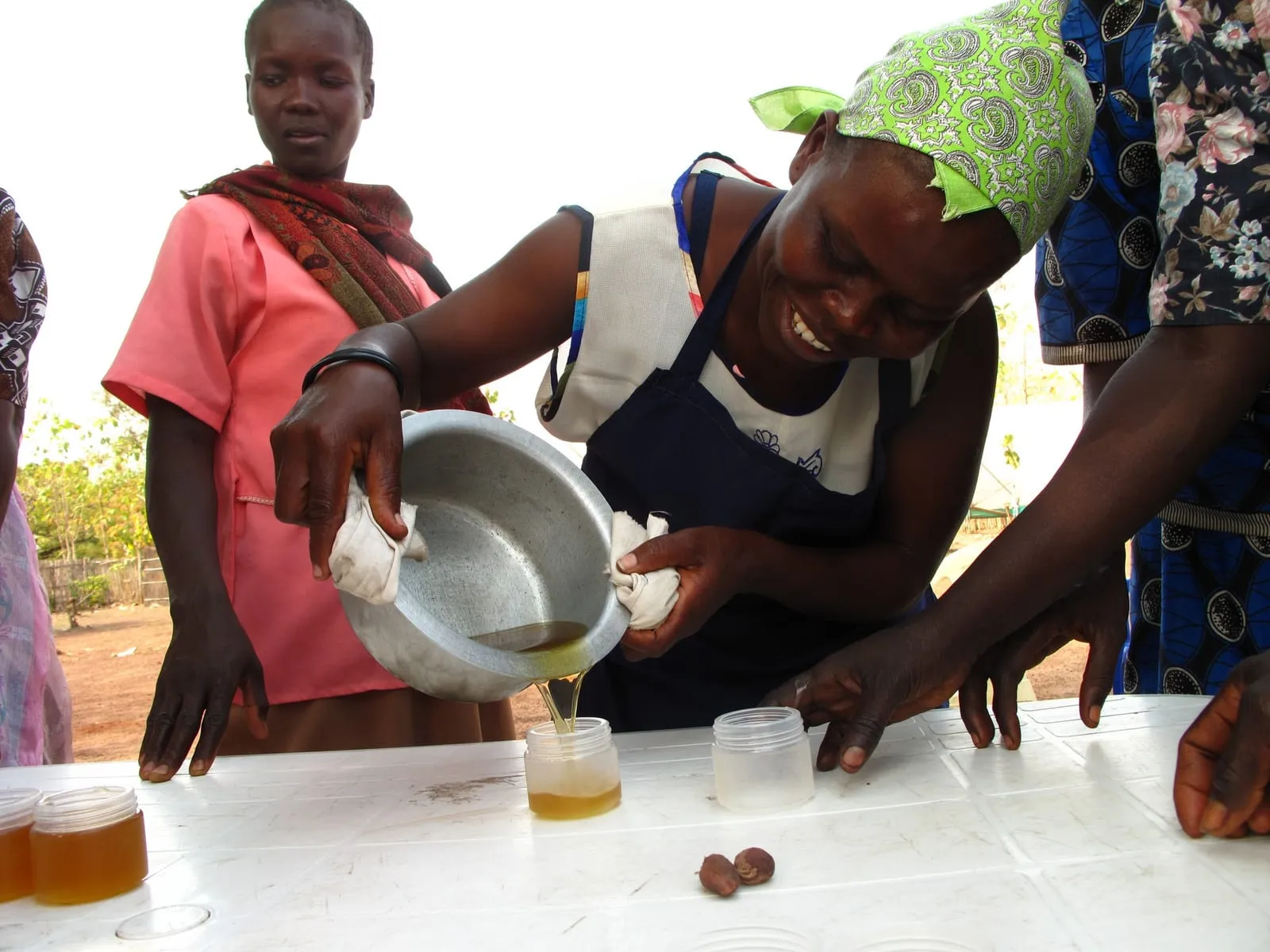
Saponification is the reaction between a fat and a strong alkali that produces soap and glycerine. The lye is consumed by the reaction. It is a reactant, not an ingredient of the finished bar, which is why finished soap contains no lye.
Saponification is the chemical reaction between a fat and a strong alkali that produces soap and glycerine. It is the only way real soap has ever been made. In a Mesopotamian clay pot or a stainless steel tank, it is the same reaction. Understanding it settles most of the arguments people have about soap, including the persistent and wrong one about lye.
The reaction itself
Fats and oils are triglycerides: a glycerol backbone with three fatty acid chains attached to it, like a capital E lying on its back.
When you introduce sodium hydroxide dissolved in water, the hydroxide ions attack the bonds holding those three chains to the backbone. The chains break free and each one pairs with a sodium ion. The backbone is released intact.
triglyceride + 3 NaOH  →  3 sodium salts of fatty acids  +  glycerol
      (fat)     (lye)              (SOAP)                  (glycerine)
Those sodium salts of fatty acids are soap. Glycerol, or glycerine, is the by-product, and it is a humectant that draws moisture to skin. In handmade cold process soap it stays in the bar. Industrial manufacturers frequently extract it and sell it separately, which is a large part of why a supermarket bar can feel drying in a way a handmade one does not.
Use potassium hydroxide instead of sodium hydroxide and you get potassium salts, which are soft and water-soluble. That is liquid soap. Same reaction, different counter-ion.
“But there is lye in it”
There is not. This is the single most common misunderstanding about handmade soap, and it comes from reading an ingredients list as a description of the finished product rather than of what went into it.
Lye is a reactant, not an ingredient in the final bar. It is consumed. Asking whether there is lye in finished soap is like asking whether there is raw egg in a baked cake.
Two things make this reliable rather than hopeful:
- The maths is exact. Every fat has a known saponification value: the milligrams of alkali needed to saponify one gram of it. Coconut oil needs roughly 0.183 g of NaOH per gram; olive oil roughly 0.135. A recipe calculates the precise lye requirement for its specific oil blend. This is arithmetic, not judgement.
- Makers deliberately use too little. Almost every recipe runs a superfat, typically 5%, meaning it includes less lye than the oils could consume. The alkali is the limiting reagent, so it runs out first and some fat is left over unreacted. That deliberate shortfall is what makes the bar conditioning, and it guarantees no free alkali remains.
How the reaction unfolds in the mould
Cold process soap is not stirred until it turns into soap. It is stirred to trace, the point where oils and lye solution have emulsified into a stable mixture that leaves a fleeting trail on the surface when drizzled from a spatula, and then poured. Trace means the reaction cannot separate again. It does not mean the reaction has finished.
What follows over the next 24 to 48 hours:
- Gel phase. The batch generates its own heat and can reach 70–80°C in the middle of the mould, turning translucent from the centre out. It is not required, but a batch that gels fully tends to be harder and more vividly coloured.
- Bulk saponification. The overwhelming majority of the reaction completes within a day or two. By this point the bar is chemically soap.
- The tail. The last fraction finishes over the following days, which is why nobody cuts a bar and sells it on the same afternoon.
At the end of that, saponification is done. The bar is still not ready, but what happens over the next six weeks is drying and crystal reorganisation, not chemistry. Two different processes that get confused constantly.
Why the oil blend decides everything
Because every fatty acid becomes a different soap molecule, the oils you choose determine the bar’s entire character:
| Fatty acid | Common source | What its soap does |
|---|---|---|
| Lauric | Coconut, palm kernel | Hard bar, large fast bubbles, cleansing to the point of stripping |
| Myristic | Coconut, babassu | Hardness, fluffy lather |
| Palmitic | Palm, tallow, shea | Hardness, stable creamy lather |
| Stearic | Cocoa butter, tallow | Hardness, dense creamy lather |
| Oleic | Olive, rice bran, avocado | Conditioning, mild, slow low lather |
| Linoleic | Sunflower, hemp, grapeseed | Conditioning and silky, but shortens shelf life |
| Ricinoleic | Castor | Boosts and stabilises lather in small doses |
A pure olive oil castile is roughly 70% oleic acid: exceptionally mild, poor lather, rock hard after a long cure. A 100% coconut bar is mostly lauric: enormous lather, and harsh enough on skin that it is usually reserved for laundry. Every well-designed recipe is a negotiation between those poles.
That is the whole craft, really. Once you know saponification is deterministic, formulating stops being folklore and becomes a set of choices with predictable consequences.
Sources
- primaryThe Effects of Cold Saponification on the Unsaponified Fatty Acid Composition of Commercial Natural Herbal SoapsGC-MS analysis confirming cold process soap retains significant unsaponified free fatty acids.
- secondarySoapCalc oil list: SAP values and fatty acid profilesPer-oil saponification values and the fatty-acid-to-property mapping used in the table below.
Read next
All articles →
The Craft
Why Real Soap Is Alkaline, and What pH-Balanced Bars Really Are
True soap always tests alkaline, usually between pH 8 and 11. Here is why that follows from the chemistry, and what a bar sold as pH 5.5 actually contains.
The Craft
Superfat and Lye Discount, Explained With a Worked Example
Superfat and lye discount are the same adjustment described from opposite ends. Here is the arithmetic, worked in full, and how to pick a number.
The Craft
How Long Each Type of Soap Needs to Cure
Cure times by recipe type, what is actually happening during the cure, and which of the numbers everyone repeats are measured rather than inherited.