Why Real Soap Is Alkaline, and What pH-Balanced Bars Really Are
True soap always tests alkaline, usually between pH 8 and 11. Here is why that follows from the chemistry, and what a bar sold as pH 5.5 actually contains.
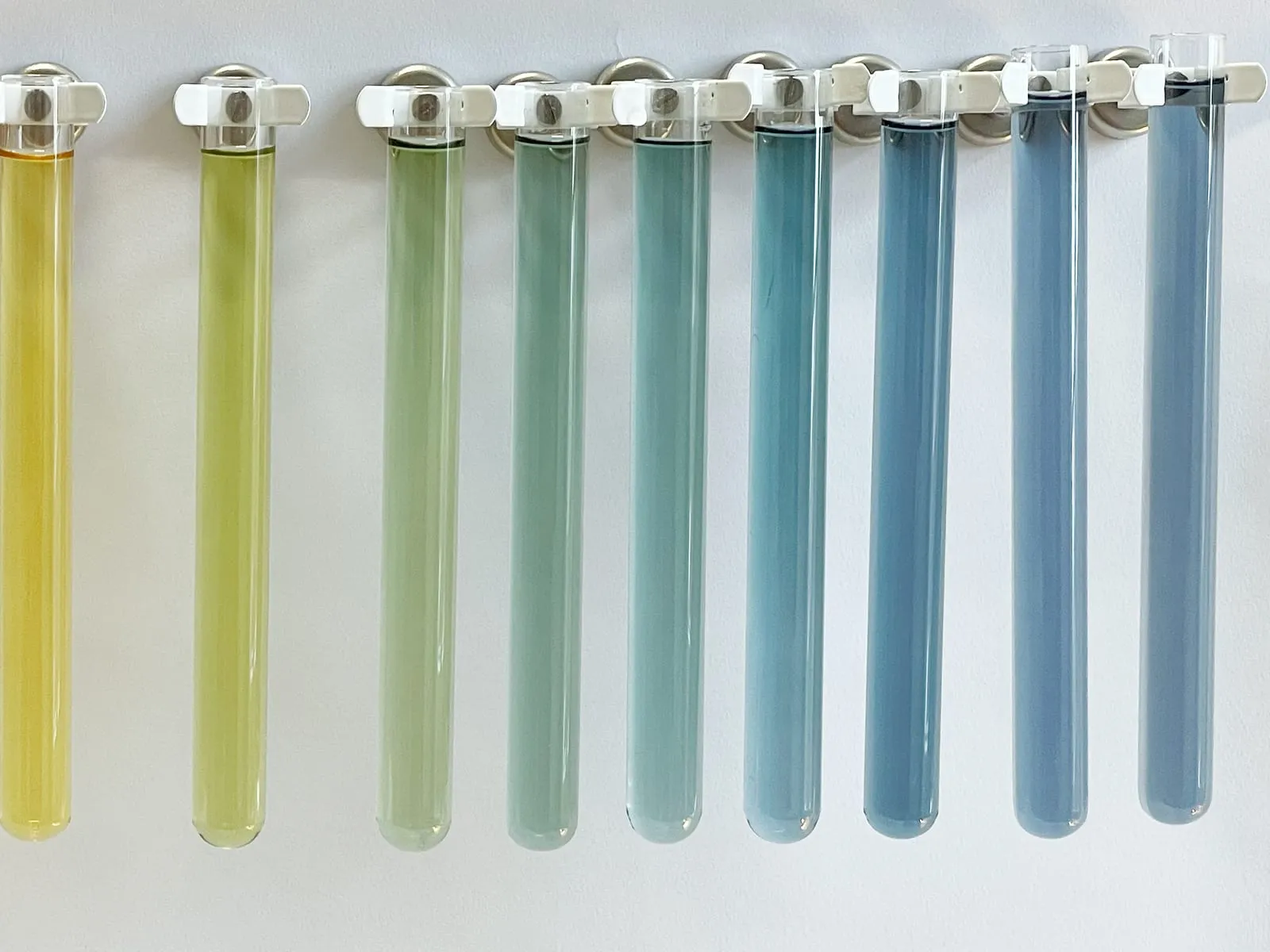
Every true soap is alkaline, measuring between about pH 8 and 11 in water, because it is the salt of a weak acid and a strong base. A bar sold as pH 5.5 is not soap but a synthetic detergent, since soap pushed down to that pH stops being soap.
Pick up almost any bar in a supermarket and the front of the pack will tell you about pH. Pick up a bar of real soap and it will not, because the honest number is not one marketing likes. True soap is alkaline. It cannot be anything else, and the reason is one line of chemistry.
Soap is a salt, and this salt is alkaline
Soap is what you get when a fat reacts with a strong base. In bar soap the base is sodium hydroxide, and the product is the sodium salt of a fatty acid, plus glycerine.
Fatty acids are weak acids. Sodium hydroxide is a strong base. When a salt made from a weak acid and a strong base dissolves in water, a small share of it reacts with the water and releases hydroxide ions. Hydroxide is what makes a solution alkaline.
So when you lather a bar, the water around your hands becomes mildly alkaline. When a 2025 study measured 96 cleansing products diluted to 1% in water, every bar soap fell between pH 8 and 11, while the syndets measured between about 5 and 7.8. That alkalinity is not a defect in the recipe or a sign of leftover lye. It is what soap is.
Why you cannot make soap at pH 5.5
The obvious question is why nobody just adds an acid and brings the bar down to skin pH.
They can try. As the pH falls, the soap molecules take a hydrogen ion back and turn into free fatty acids again. Free fatty acids do not dissolve in water and do not lather. Push a soap solution far enough toward acidic and it turns cloudy and stops cleaning. You have not made acidic soap. You have unmade the soap.
That is why every bar sold as pH 5.5 or pH balanced is built on something else: synthetic detergents, usually called syndets. They are surfactants designed to work at a lower pH. Many supermarket “beauty bars” are syndets, or a blend of soap and syndet, and the label will usually say “cleansing bar” rather than “soap”.
What skin pH actually is
The number 5.5 gets repeated so often that it reads like a fact. The measured figure is lower. A 2006 study in the International Journal of Cosmetic Science found that natural skin surface pH sits below 5 on average, and that this acidity favours the skin’s normal resident bacteria.
So the skin is acidic, and soap is alkaline. Both statements are true at once, and the useful question is what happens when they meet.
What this means for you
Washing with soap briefly raises the pH on the surface of the skin. How much that matters depends on the skin.
- For most people, a well-made, properly cured bar used once or twice a day is comfortable, and the question of pH never comes up.
- For very dry, reactive or eczema-prone skin, some people do find a lower-pH syndet gentler. That is a legitimate reason to choose one, and it is a choice between two kinds of cleanser rather than between “chemical” and “natural”.
- For any skin condition, a dermatologist is the right person to ask, not a soap maker or a pH strip.
The short version
Real soap is alkaline because of what soap is. A label promising pH 5.5 is describing a syndet, which may suit you well, but it is a different product. Neither is a trick. The trick is only in pretending one is the other.
Sources
- primaryChildren's soap pH analysis and its meaning in children's skin cleansing, Revista Paulista de Pediatria (2025)Measured pH of 96 cleansing products at 1% dilution: bar soaps between 8.01 and 11.01, syndets between 4.99 and 7.78.
- primaryLambers et al., "Natural skin surface pH is on average below 5", Int J Cosmet Sci, 2006The figure for healthy skin surface pH, which sits below 5 on average rather than the 5.5 often quoted.
- secondaryWikipedia: SaponificationSoap as the salts of fatty acids formed when a fat reacts with a strong base.
- secondaryWikipedia: DetergentSynthetic detergents as a distinct class of surfactant from soap.
Read next
All articles →
Ingredients
Activated Charcoal in Soap: What It Does and What It Does Not
Charcoal soap is sold as a detox. The real story is smaller and more useful: what activated charcoal does in a rinse-off bar, and which claims to ignore.
Buying Well
How to Make a Bar of Soap Last Longer
Most bars do not wear out, they dissolve. Six habits that slow that down, from the soap dish to the cure, and why a handmade bar rewards them more than most.
Buying Well
Why Handmade Soap Costs More Than a Supermarket Bar
A handmade bar can cost several times a supermarket one. Where that money goes: the oils, the weeks on a curing rack, the glycerine, and the work done by hand.