Tangedu (Tanner's Cassia): The Flower Behind a Telangana Soap
Tangedu is Senna auriculata, the state flower of Telangana and a fixture of Bathukamma. What the plant is, where its name comes from, and what we can honestly claim.
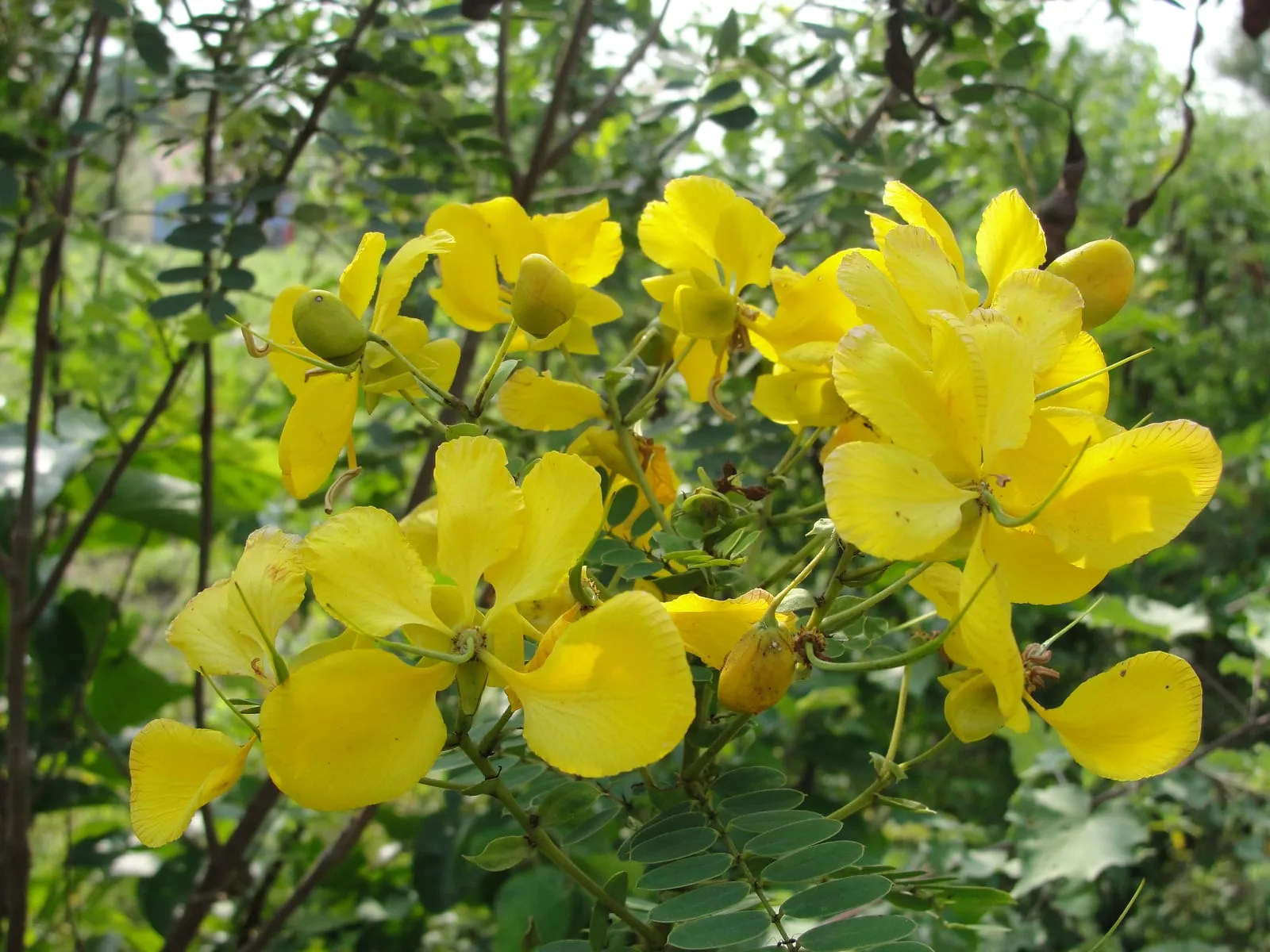
Tangedu (తంగేడు) is Senna auriculata, also called tanner's cassia or avaram senna. It is the state flower of Telangana and one of the flowers stacked into Bathukamma. Its bark is rich in tannins, which is how it earned the name tanner's cassia.
Ask someone from Telangana about tangedu and you will probably hear about Bathukamma before you hear about botany. The bright yellow flower is part of the season. It is also a plant with a long working history, and that history is where its English name comes from.
What tangedu is
Tangedu (తంగేడు in Telugu) is the shrub Senna auriculata. It goes by several names in English:
- Tanner’s cassia, from its use in tanning leather
- Avaram senna, from its Tamil name, ஆவாரை (āvārai)
- Cassia auriculata, the older botanical name you will still see on labels
It grows in the dry regions of India and Sri Lanka, and its flowers are a bright, clear yellow.
Telangana’s state flower
Tangedu is the state flower of Telangana. It is not an arbitrary choice. The flower is woven into Bathukamma, the flower festival celebrated across the state, where wild seasonal flowers are gathered and stacked into a tall layered arrangement. Senna is among the flowers gathered for it, alongside celosia, marigold and others.
For many people in Telangana the colour of tangedu is simply the colour of that festival.
Why “tanner’s” cassia
The bark of Senna auriculata is rich in tannins. Tannins bind to proteins, which is the chemistry behind turning raw hide into leather. A plant with tannin-rich bark was valuable to tanners, and the name stuck.
That is the honest origin of the English name. It describes a use of the bark, not the flower.
Traditional uses, and what we will not claim
Various parts of the plant appear in traditional medicine in South India, and the flowers have long been used in home preparations for skin and hair. That tradition is real, and it is a large part of why the flower turns up in soap at all.
Tradition is not the same as evidence, though. We have not found strong clinical studies showing that tangedu treats skin conditions, and we are not going to imply that it does. If you have a skin condition, the right person to ask is a dermatologist.
What it does in a soap
Tangedu usually goes into a soap in one of two ways: infused into an oil before the soap is made, or as dried flower powder stirred into the batter. Some makers use both. What you notice is a soft, warm colour and a mild bar. The gentleness comes mainly from the formulation as a whole, the oils, the superfat and a full cure, rather than from the flower alone.
The short version
Tangedu is Senna auriculata: tanner’s cassia, avaram senna, Telangana’s state flower and a Bathukamma flower. Its English name comes from the tannins in its bark. It has a long traditional history, and a much shorter list of things anyone has proven. Both are worth knowing.
Sources
- secondaryWikipedia: Senna auriculataThe botanical identity of tangedu, its common names, its status as the state flower of Telangana, and the tannins in its bark.
- secondaryWikipedia: BathukammaSenna among the wild flowers gathered for Bathukamma flower stacks.
Read next
All articles →
Ingredients
Manjistha (Indian Madder) in Soap: Colour, Tradition and Evidence
Manjistha is Rubia cordifolia, the Indian madder root that dyes a soap rose to red-brown. Where it comes from, what it does in a bar, and what is only tradition.
Ingredients
Activated Charcoal in Soap: What It Does and What It Does Not
Charcoal soap is sold as a detox. The real story is smaller and more useful: what activated charcoal does in a rinse-off bar, and which claims to ignore.
Ingredients
Kaolin, Pink, Green and Bentonite: Cosmetic Clays Compared
Cosmetic clays differ mainly in how much oil and water they absorb. Here is how the common ones compare, which is gentlest, and which suits which skin.